
Send money home
Your first transfer is free and arrives in seconds
The Mexican people have many centuries of history—a history as vast and diverse as their roots. It is precisely that diversity, everything that was shaped or transformed over so many centuries to become a nation, that forms part of the Mexican essence.
Culture, traditions, language, and religion are part of our identity and give us a sense of belonging to this land.
What is Mexican identity?
La identidad es la forma en la que los individuos y los pueblos se ven a sí mismos, se conciben a sí mismos, y cómo eligen expresarlo y representarlos. En dicha concepción entran en juego la cultura y las tradiciones, la lengua, las individualidades, la familia y el sentido de pertenencia a un determinado grupo o sector.
Mexican identity has deep and very strong roots, and throughout history, it has incorporated many traits from all the societies and historical events that have shaped the Mexican people.
Definition of Mexican identity
Mexican identity has many characteristics that come from both the indigenous nations and the peoples who have migrated to the region from Africa, Asia, and later, Europe.
**Colonialism** imposed a language, among many other factors that have forged Mexico's history, although the languages of the indigenous peoples still persist and are joined by the new idioms of Mexicans who emigrate to the United States.
Within our identity, there is also a view of the United States as a dominant country in our culture. This idea is polarized by our sense of belonging to the North American continent. We are North American, but we have our own history.
Importance of Mexican traditions and culture
The traditions of any community or nation play a very important role in the preservation of culture. When a people keeps its culture and traditions alive, it manages to endure over time and sustain its identity.
Traditions often carry specific knowledge, perceptions, techniques, and history that have shaped a community's identity and make people feel they are a part of it.
Mexican historical and cultural influences
Mexico is a country that has had an enormous presence of indigenous peoples or nations, often mislabeled as "Indians," the most well-known being the Maya or Nahuatl peoples. However, 68 indigenous peoples have been officially identified, with their own languages and linguistic variants, totaling more than 300.
With the subsequent European invasions, especially by the Spanish, and the long period in which the continent was subjected to colonialism, new mixtures of peoples, religions, and cultures began to emerge.
Furthermore, these foreigners often arrived with slaves from Africa, adding a new element to the situation in the territory. Finally, during the various wars that took place in Europe a few centuries later, Mexico welcomed refugees, mostly Spanish.
Impact of Mexican culture and traditions on the world
Mexican culture has crossed borders, becoming one of the best-known and most widespread Latin cultures worldwide.
La gastronomía es una parte muy importante de la cultura que obtuvo mucha popularidad en el exterior. Actualmente, es posible encontrar tiendas y restaurantes que cocinen tacos, burritos, enchiladas o nachos en cualquier parte del mundo.
La música, con los famosos mariachis, también logró hacerse su propia fama mundial. Y con ello, todo lo que tenga que ver con algunas famosas festividades, como el Día de los Muertos, los quinceañeros y las piñatas.
The impact of Mexican culture is such that it was in the United States where the date of Cinco de Mayo became a major celebration. **Cinco de Mayo** commemorates the Battle of Puebla, in which Mexican forces prevented the advance of the Second French Empire, and in doing so, also prevented a French invasion of the United States.
The fact that this date is not as significant in Mexico as it is in its neighboring country demonstrates the great influence that the history of this nation has had on the rest of the world.
Most Important Mexican Traditions
Mexico is home to a vast number of traditions as varied as the towns, nations, and communities that inhabit it. However, there are some that stand out worldwide for their uniqueness.
As we mentioned earlier, Mexican gastronomy and mixology are very popular around the world. Piñatas have also become a widely adopted tradition in many countries, and mariachis are a Mexican symbol frequently represented within Anglo-Saxon and European culture.
Celebrations and Festivities
But, without a doubt, what stands out most about Mexican culture are its celebrations and festivities. Each has a very particular meaning and a way of celebrating that catches the eye of hundreds of thousands of foreigners.
Day of the Dead
Possibly the most famous and replicated tradition in all of Mexico. The **Day of the Dead** is more than just a celebration; its meaning has transcended its origins to become a milestone of Mexican culture and a draw for hundreds of tourists.
The celebration takes place on November 1st and 2nd, and **pays tribute to the deceased of each family.** Homes are filled with colorful, illuminated altars where they joyfully remember the past and the teachings of those who have departed from this world.
The meaning of death, according to this tradition, has captivated so many people around the world that even the giant conglomerate Disney paid tribute to it with the famous film "Coco."
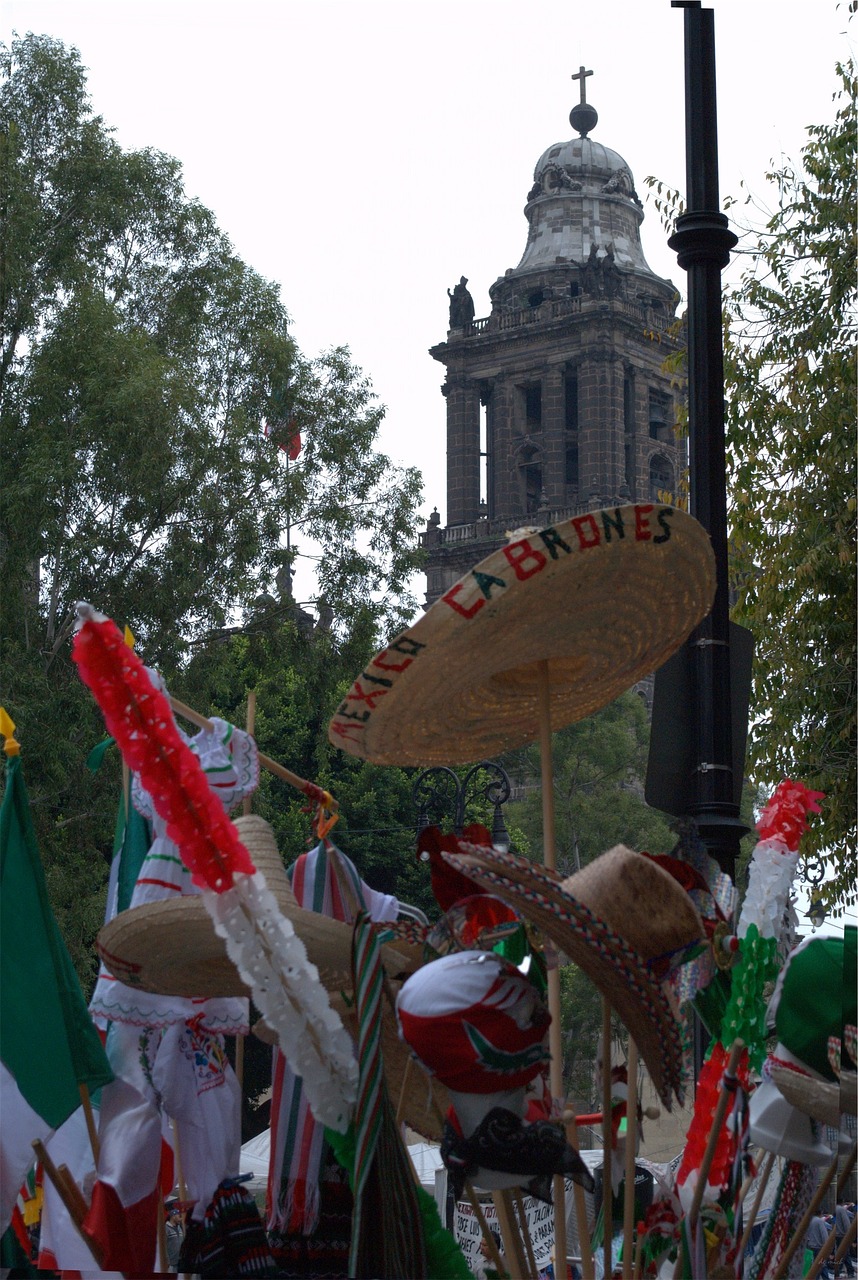
Independence Day (September 16)
Although the commemoration date is September 16, the celebration begins on the night of the 15th, replicating the sequence of events that led to the proclamation of independence for the Mexican people.
On September 15, 1810, the priest Miguel Hidalgo called for his people to rise up against Spanish forces, beginning the war for independence that would culminate in September 1821.
For the festivities, on **September 15 at 11:00 PM,** people gather in the city's main square while the President, from the balcony of the National Palace, recreates the famous Grito de Dolores ("Viva México"), the cry with which Hidalgo initiated the independence process.
Christmas in Mexico
To celebrate the birth of Jesus, Mexicans have a series of deeply rooted traditions that we will discuss below.
To start with the Christmas spirit, from December 16, a reenactment of the Virgin Mary is carried out during the posadas. This is a tradition that dates back several centuries and takes place until December 24, as it represents the pilgrimage of Mary and Joseph to the town of Bethlehem.
On this occasion, the piñata also plays a role, symbolizing the 7 deadly sins according to the Catholic religion. Breaking it signifies that faith has triumphed over them.
To wrap up the holiday season, a very popular custom is celebrating the arrival of the Three Wise Men with a traditional rosca de reyes, that sweet treat so typical of this time of year, and above all, delicious.
Related content