
Send money home
Your first transfer is free and arrives in seconds
Mexican culture is incredibly rich and vast, and its unique qualities have spread far and wide across the globe. In particular, Mexicans have brought their gastronomy to many countries, winning over millions of palates.
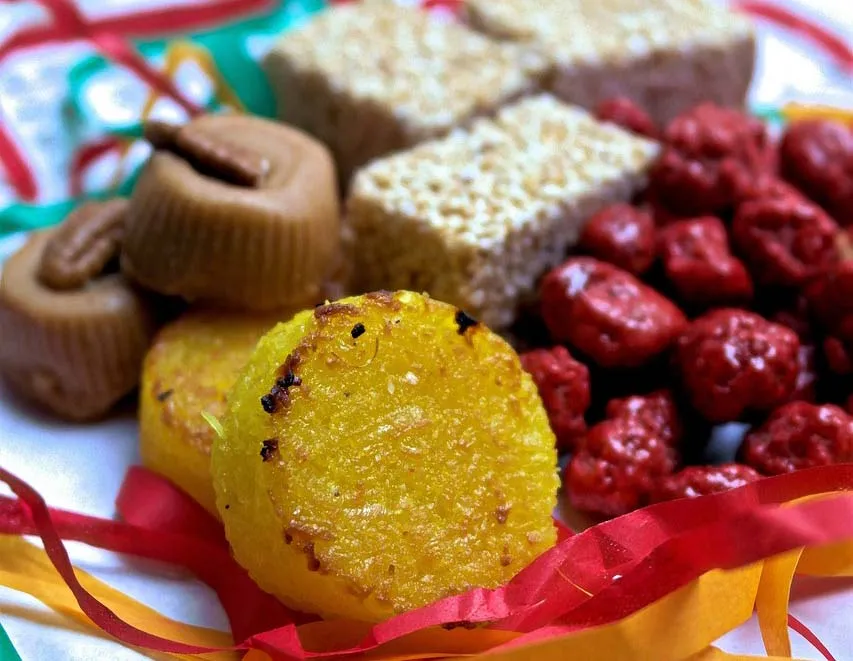
Within Mexican gastronomy, sweets are a very important part. They come in all shapes and for all ages, and are the result of a blend of the most traditional aspects of their history and what the colonial culture left behind.
However, finding them in stores in the United States is quite a feat, as many were banned in different states due to their high concentrations of sugar, additives, and ingredients like chili powder.
What are the traditional Mexican sweets?
The list of traditional Mexican sweets is very extensive and varied, but there are some that have gained greater popularity and recognition due to their exquisite histories and flavors.
The sweet known as “Alegría” is perhaps the most famous, as it was declared Intangible Cultural Heritage of Mexico City in 2016. It is made with amaranth seeds and honey or sugar. Another well-known delight is the “Cocada”, a recipe based on shredded coconut, sugar, and milk.
Although the list is very long, we can name some of the most traditional Mexican sweets, such as:
- Glorias;
- Palanquetas;
- Muéganos;
- Ate.
- Sweet potato or pumpkin candies;
- Buñuelos and
- Churros.
And we cannot fail to mention the** wide variety of treats** that the Mexican industry markets locally, such as the well-known “Pulparindo”.
Which Mexican sweets are not available in the United States?
Often, Mexicans living abroad miss the things that make their culture so special. Changes in eating habits and the culture shock of new flavors can make the feeling of displacement more difficult, especially when it comes to very typical, niche recipes.
In fact, there is a small group of Mexican treats that the government of some states prohibits from being sold within their territory due to the presence of high amounts of sugar, sodium, food coloring, citric acid, and additives.
Some food colorings found in tamarind candies or chili powders have been linked to allergies in children or inflammation. For this reason, they banned the sale of “Pulparindo” in the state of California, for example.
Sale of Mexican sweets in the United States
Despite all of the above, Mexicans make up a very large community in the United States, and because of this, there is also a large sector of the food market that caters to the needs of this extensive community.
Through websites like Amazon, it is possible to find a large number of Mexican sweets for sale. But there are also companies dedicated to the exclusive import of sweets and treats from Mexico to the U.S..
This is the case of the company** Mexitreat,** founded in California by two young people raised in Mexico who saw an opportunity to supply all those nostalgic for these sweets, and who are now succeeding in the market. And like this one, there are many companies dedicated to bringing the sweetest Mexican memories right to your doorstep.
Mexican stores in the United States
Given the huge Mexican community residing in the United States, it is possible to find many stores of Mexican origin, as well as businesses that offer Mexican products.
Some of the most prominent stores include La Michoacana Meat Market, El Super, La Fiesta Supermarkets, Fiesta Mart, El Morelia Super Mercado, Cárdenas Market, Mi Dulcería Mexicana, and Mi Oaxaca Market, among others.
Furthermore, there are many services that import Mexican products into the United States, providing the community with plenty of options to reconnect with their roots while abroad.
Related content