Every year, Latinos in the United States send more than $174 billion to Latin America and the Caribbean. The U.S. accounts for 96% of remittances received by Mexico and more than 73% of those arriving in Central America, making this flow one of the most important sources of income in the region. Today, digital services allow these transfers to be completed in minutes from your phone, with fees starting at $2.99 USD.
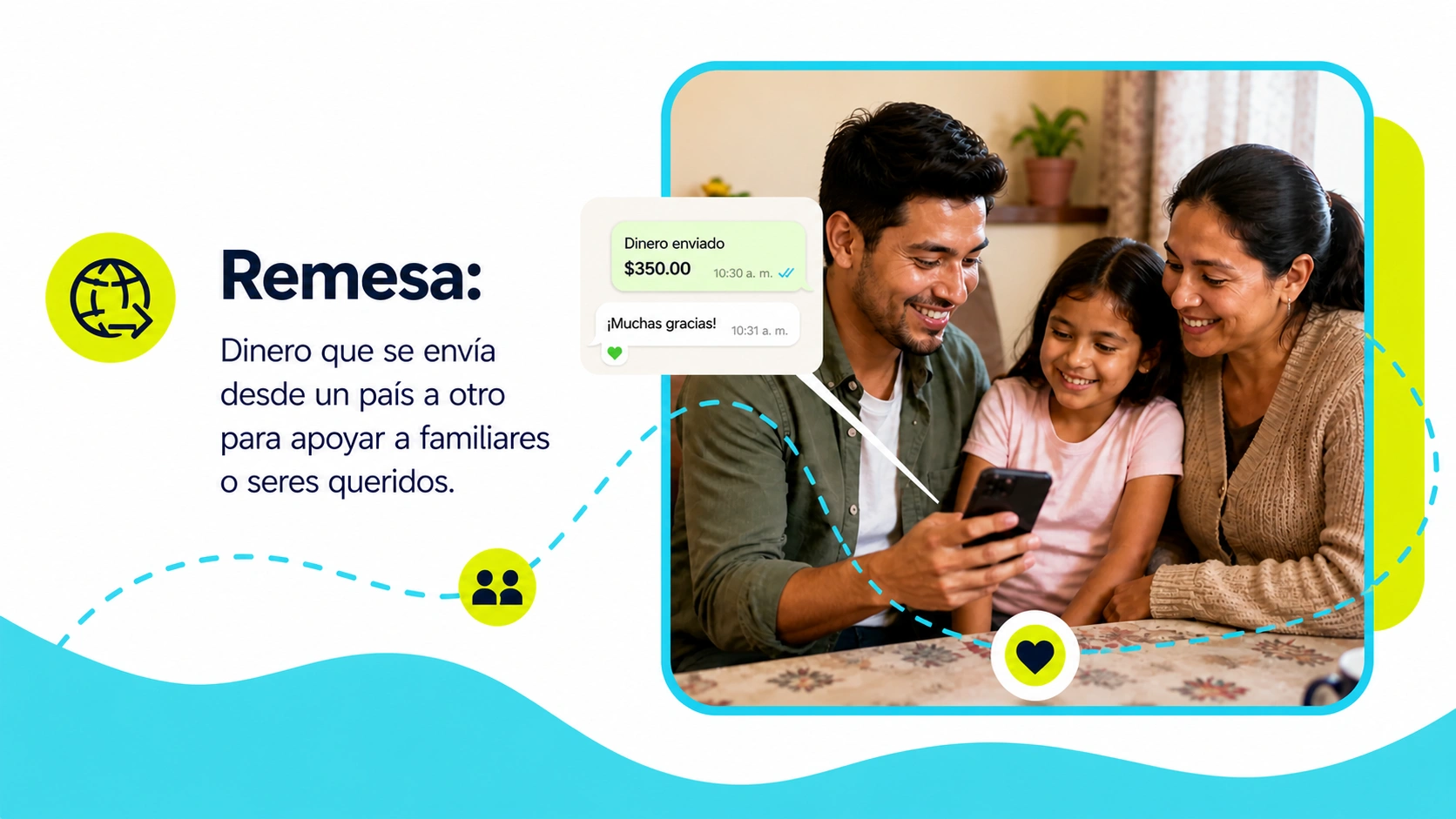
Sending a remittance is not just a financial transaction. It’s paying your mom’s rent. It’s making sure your kids go to school. It’s your brother being able to buy medicine when he needs it. It’s the most concrete way to tell your family: "I’m here for you, even if I’m far away."
But behind that gesture is a complex system that is worth understanding: who regulates it, how much it really costs, what rights you have, and how your family receives that money on the other side. This guide covers all of that: so you can send with confidence, pay less, and have your family receive more.
1. The remittance system for the Latino immigrant in the U.S.
Remittances are not a new phenomenon. But their current scale is unprecedented. The Inter-American Development Bank estimates flows of more than $174 billion to Latin America and the Caribbean in 2025, with the United States as the dominant origin for almost every destination in the region. This money reaches families in a way that no public policy has managed to replicate: directly, from person to person, at the moment it is needed.
Who is involved in each transfer
Each transfer involves at least five actors. Understanding them helps you understand why money sometimes takes time, why the cost has two parts, and what happens when something goes wrong.
- The sender: the person who initiates the transfer from the U.S.
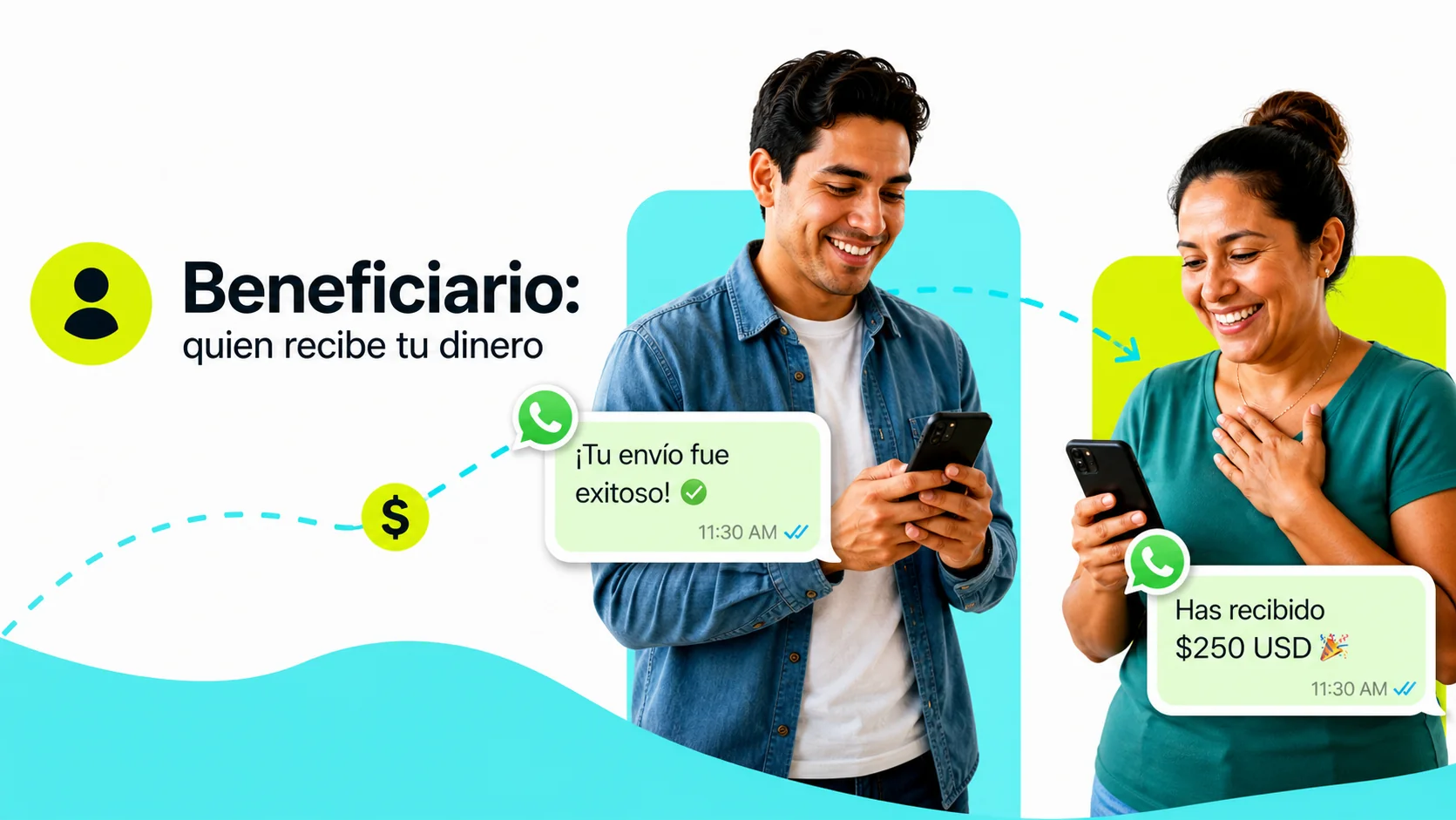
- The beneficiary: your family member in the destination country.
- The money transfer service provider: the company that facilitates the transfer (Félix, Remitly, Western Union, Wise, among others).
- Correspondent banks: the financial institutions in the destination country that receive the funds and distribute them to local banks or payment networks.
- Regulators: the government entities that oversee that the entire process is legal, transparent, and secure.
How money moves from point A to point B
What seems simple from the outside (you open an app, enter the amount, the money arrives) involves a chain of steps coordinated in seconds:
- You enter the amount and your beneficiary's details. The provider shows you the fee, exchange rate, and final amount before you confirm.
- The provider receives your payment (by card or cash) and records the order in their system.
- If the destination country uses a currency other than the dollar, the provider converts the amount at the current exchange rate.
- The provider transfers the funds through their settlement networks to a local bank, cash payment network, or digital wallet in the destination country.
- Your family member receives a notification that the money is available, whether in their account, at a pickup location, or in their mobile wallet.
The regulatory framework for remittances in the U.S.
Sending money from the U.S. is a federally and state-regulated activity. Any company operating as a Money transfer service provider must register as a Money Services Business (MSB) with FinCEN (Financial Crimes Enforcement Network), a division of the U.S. Department of the Treasury. Many states also require their own licenses to operate within their territory.
To operate legally in the United States, a money transfer company must register as a Money Services Business (MSB) with FinCEN and comply with the state regulations of each state where it provides service. You can verify if a company is registered by searching the public registry at fincen.gov.
The CFPB (Consumer Financial Protection Bureau) is the agency that protects your rights as a consumer of remittance services. Thanks to the CFPB's Remittance Rule, any registered provider is required to inform you, before each transfer, of the exact amount your beneficiary will receive, the exchange rate applied, all fees, and the estimated delivery date. You will see more about your rights in section 5.
What makes the U.S.-Latin America system unique is not just the volume: it is the dependency. For millions of families in Mexico, Guatemala, Honduras, El Salvador, and the rest of the region, remittances represent between 10% and 25% of the national GDP. They are the safety net that supports health, education, housing, and food expenses. That is why every transfer matters: understanding the system is the first way to protect it.
2. How the money reaches your family in Latin America
The real question is not "how do I send money" but "how does my family receive it." That distinction changes everything. The method you choose determines whether your family member needs a bank account, if they have to go to an office or can receive it at home, and how long they wait.
There are four main ways a remittance can reach your family's hands.
Bank deposit: how your family member receives it in their account
The money arrives directly into your family member's account. They don't have to do anything other than wait for the notification from their bank. It is the most convenient option when the beneficiary has an active account. For transfers to Mexico, the SPEI network allows deposits in minutes using the beneficiary's 18-digit CLABE number. In Colombia, local banks receive international transfers in hours. In other countries in the region, the time varies depending on the receiving bank.
The information your family member needs to have ready:
- Account number or CLABE/local bank routing number
- Full name as it appears on the account
- In some cases, the name of the receiving bank
Check the specific details for each country in section 4.
Cash pickup: option without a bank account
The money becomes available at a network of local payment points. Your family member receives a notification and goes to pick it up by presenting their ID. It is the most accessible option for those who do not have a bank account, live in rural areas, or prefer to handle cash. Agent networks in Latin America cover major cities and many secondary areas, although coverage varies by country. With Félix, the money is available for pickup in minutes in most cases.
What your family member needs to have ready:
- Valid official identification (INE, ID card, passport, or local equivalent)
- Transfer reference number
- In some cases, the transfer PIN code
The beneficiary does not need to have a bank account to pick up cash.
Digital wallets: receive money directly on your phone
In some countries, money can arrive directly into the beneficiary's mobile wallet, without a bank account and without needing to go anywhere. In Mexico, this works with Mercado Pago, Cuenta Nu (Nubank), and Spin by Oxxo. In Colombia, with Nequi and Daviplata. In Peru, with Yape. The beneficiary receives the money in their app and can use it to pay, transfer, or withdraw cash at nearby locations.
Check What is a wallet deposit? Mercado Pago, Cuenta Nu, and Spin to see how it works in Mexico.
Paying for your remittance in cash at a store in the U.S.
Félix allows the sender to pay in cash at participating stores in the U.S. The process: you generate a barcode on WhatsApp, go to the store (Walmart, CVS, 7-Eleven, Walgreens, among others), pay at the register, and the money reaches the beneficiary once the system confirms the payment. The code has a limited validity: check the exact time in your Félix WhatsApp chat. See How does cash transfer work? for the full process, and find the stores nearest to you before heading out.
Comparison of receiving methods for your family member
| Method | How it arrives | What the beneficiary needs | Typical speed | Requires a bank account |
|---|
| Bank deposit | Directly to their account | Active account number | Minutes to hours | Yes |
| Cash pickup | Goes to the payment location | Valid ID + transfer reference | 30 min to 24h | No |
| Digital wallet | To their mobile app | Active app (Nequi, Mercado Pago, etc.) | Minutes | No (app only) |
Check How can they receive my money? to see all available methods based on the destination country.
Félix Pago accepts two payment methods for the sender in the U.S.: a debit or credit card issued in the United States (except American Express) and cash at participating stores like Walmart, CVS, and 7-Eleven. Félix does not accept bank transfers, Zelle, or wire transfers. To see the step-by-step guide, check How to send money with Félix Pago?
3. How much your family receives: costs and exchange rate
The right question isn't "how much do I pay?" but "how much does my family receive?" That shift in focus saves you real money. The cost of sending a remittance has two parts, and many providers deliberately hide the second one.
The fee: the visible cost
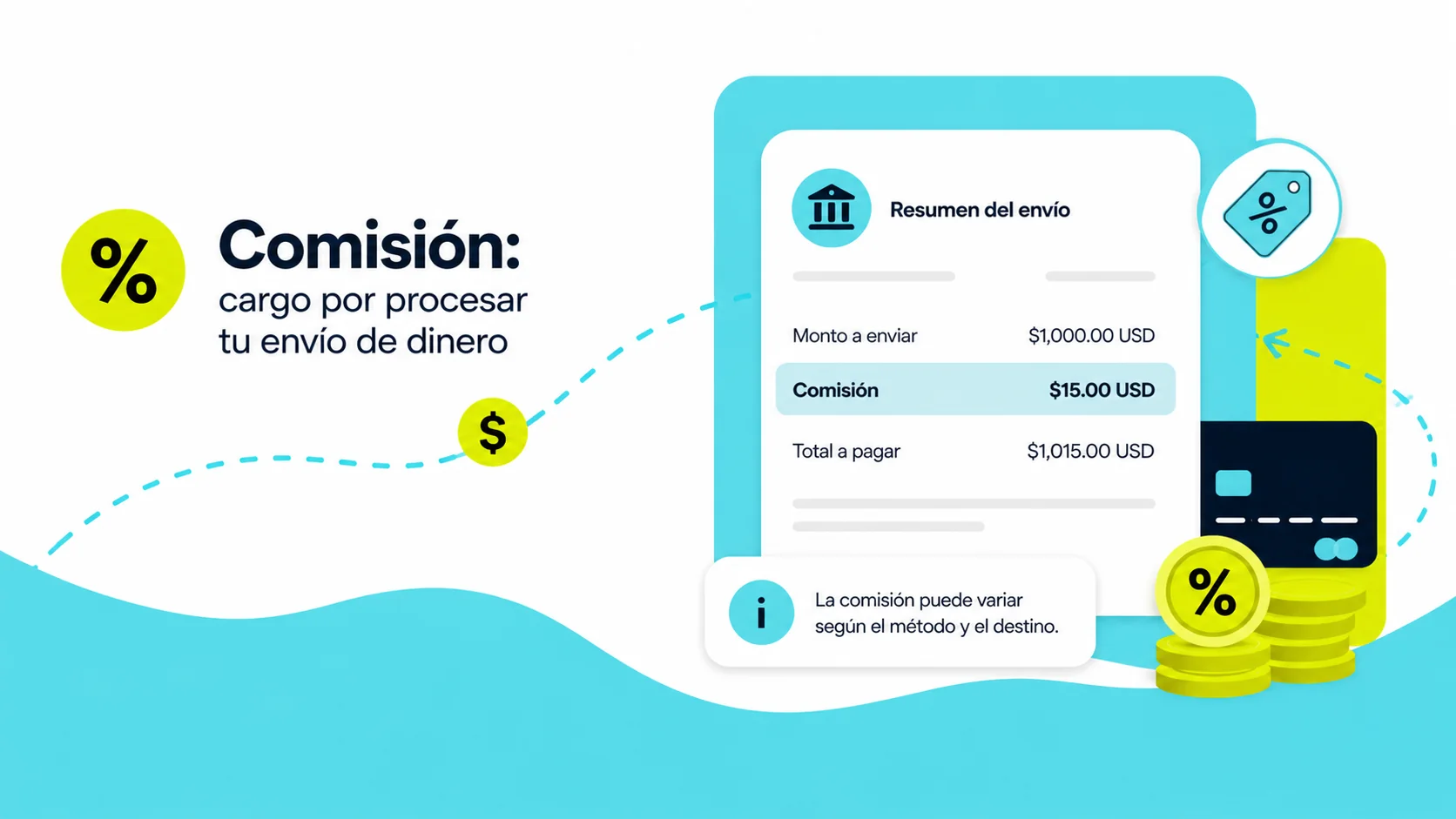
The Fee is the explicit charge the provider bills you to process the transfer. It can be a flat rate (for example, $2.99 USD) or a percentage of the amount sent. It is what you see first when comparing services.
The exchange margin: the invisible cost
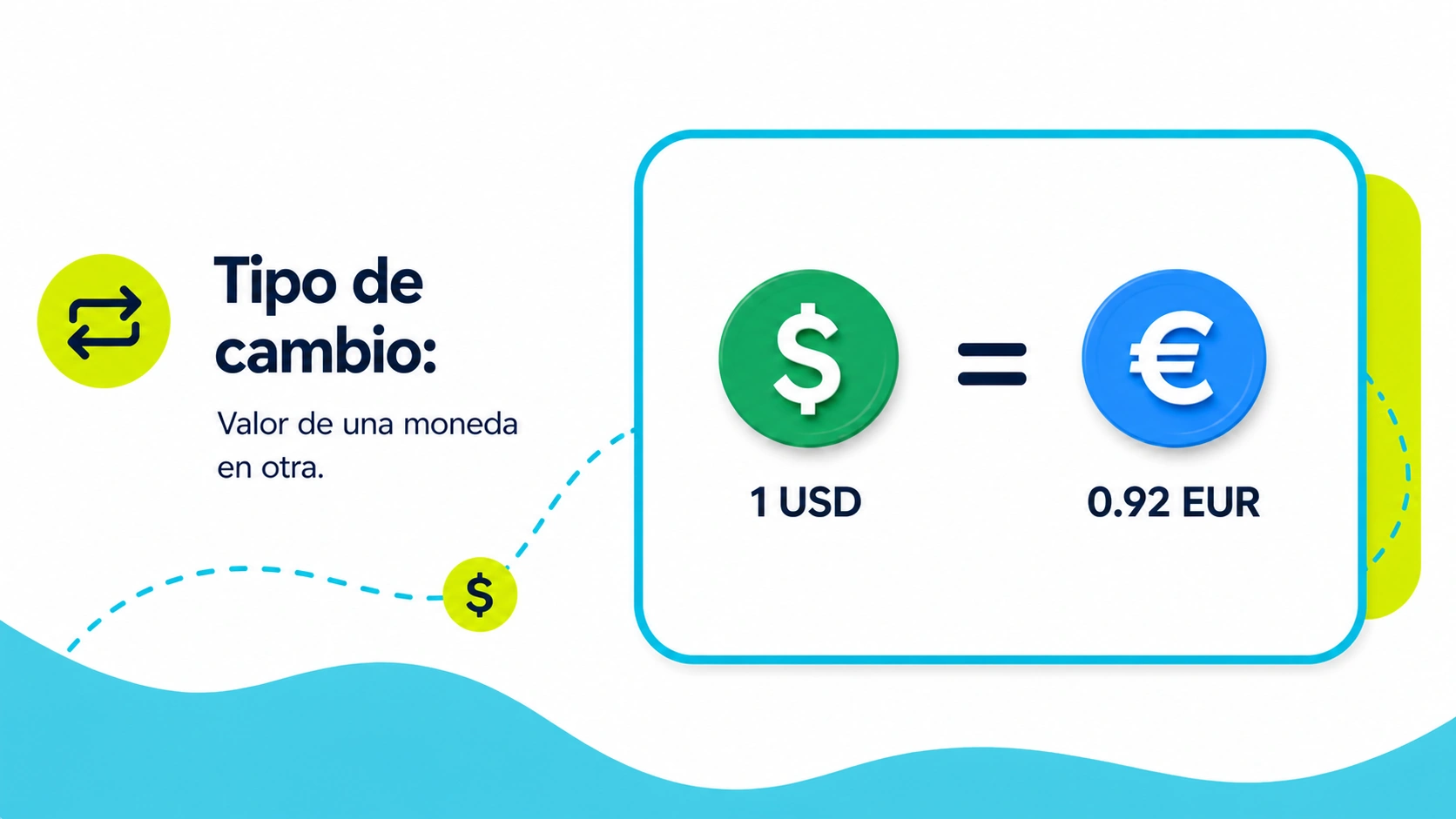
The Exchange margin is the difference between the Interbank rate (the real exchange rate between banks, without a margin) and the rate the provider offers you. Almost no provider gives you the exact interbank rate. The difference, even if it seems small, adds up with every transfer.
A service that advertises a "$0 fee" can be more expensive than one that charges $3.99 if it applies a margin of 2% or more on the real exchange rate. For $300 sent to Mexico, a 2% difference in the rate equals about $6 less that your family receives, regardless of the visible fee. The only way to compare correctly is to look at the final amount your beneficiary receives, not what you pay.
A concrete example with numbers
Suppose you want to send $300 to Mexico. The day's interbank rate: 19.50 pesos per dollar.
- Service A: charges a $2.99 fee and applies a rate of 19.30 (1% margin). Your family member receives 5,790 pesos.
- Service B: advertises "$0 fee" but applies a rate of 18.90 (3% margin). Your family member receives 5,670 pesos.
Service A charges a visible fee, but your family member receives 120 pesos more. Service B seems cheaper but is actually more expensive in practice.
How to see the exact amount before confirming
With Félix, the transfer summary on WhatsApp shows the exact fee, the exchange rate applied, and the amount your beneficiary will receive in local currency before you confirm. If you aren't convinced, you can cancel at no cost. Félix's fees for bank account transfers start at $2.99 USD depending on the destination country. To see the exact rates by country, check How much does Félix Pago charge in fees?
For large amounts, the exchange margin matters more. A half-percentage point difference on a $1,000 transfer is $5 less that your family receives. Over twelve transfers a year, that adds up to $60 that doesn't make it home.
How to verify the exchange rate before sending
Search Google for "peso to dollar" (or the currency pair you are interested in) to see the current reference rate. Compare the rate the provider offers you against that reference. You can also use Félix's Dollar price today tool to see the real-time exchange rate for the destination country.
For more tips on how to optimize every transfer, read Tips for sending money and Understanding exchange rates and how they affect your money.
Sending limits with Félix
The minimum amount per transfer is $1 USD. Check What is the minimum amount? for more details.
The maximum amount depends on your verification level:
| Verification level | Daily limit | Monthly limit |
|---|
| No verification | $1,500 USD | $2,999 USD |
| With full verification | $2,999 USD | $9,999 USD |
Verification is a one-time process and remains active permanently. See What is the maximum transfer amount? and What are the transfer limits? for full details.
Also read How much money can I send to Mexico in remittances? and How much money can be sent to Mexico per month? for additional context on market limits.
4. How to send money from the U.S. to Latin America by country
Félix sends money to countries throughout Latin America. Each country has its own banking system, its own currency in most cases, and its own particularities for receiving remittances. Here are the essential details for each destination.
How to send money to Mexico
Currency: Mexican Peso (MXN). Bank deposits in Mexico work through the SPEI system, using the beneficiary's 18-digit CLABE number. It is one of the fastest payment systems in the region: deposits arrive in minutes most of the time. In addition to bank deposits, cash pickup and deposits to digital wallets (Mercado Pago, Cuenta Nu, Spin by Oxxo) are available. The beneficiary receiving funds in their wallet only needs to have the app active and provide their associated CLABE. See Where can I send to in Mexico? and read about the impact of remittances in Mexico.
How to send money to Guatemala
Currency: Guatemalan Quetzal (GTQ). The available methods are bank deposit and cash pickup. Many families in rural areas rely on cash because access to formal bank accounts is limited. Before confirming the transfer, ask your beneficiary which method is most convenient for them and if they have an active account. See Where can I send to in Guatemala? and read The impact of remittances in Guatemala.
How to send money to Honduras
Currency: Honduran Lempira (HNL). Available methods: bank deposit and cash pickup. Félix's fees to Honduras are tiered by amount (from $5.99 to $27.99 depending on how much you send), which is worth checking before confirming. The coverage of cash pickup locations is solid in major cities. See Where can I send to in Honduras? and read The impact of remittances in Honduras.
How to send money to El Salvador
Currency: United States Dollar (USD). This is a concrete advantage: El Salvador adopted the USD as its official currency, which means there is no currency conversion. Your family member receives exactly the dollars you sent, without loss due to exchange rates. Available methods: bank deposit and cash pickup. See Where can I send to in El Salvador?
How to send money to Nicaragua
Currency: Nicaraguan Córdoba (NIO). Bank deposit is the primary method; for other delivery options, check the available methods in the WhatsApp chat. Confirm with your beneficiary the most accessible method based on their location. See Where can I send to in Nicaragua?
How to send money to Colombia
Currency: Colombian Peso (COP). Colombia has one of the most advanced digital ecosystems in Latin America for receiving remittances. In addition to traditional bank deposits, Nequi and Daviplata allow money to be received directly into mobile wallets without the need for a formal bank account. Cash pickup is also available. Check out Where can I send in Colombia?.
How to send money to the Dominican Republic
Currency: Dominican Peso (DOP), with the option to receive in USD. Available methods: bank deposit and cash pickup. Félix charges a different fee depending on whether the beneficiary receives in DOP or USD: check the summary before confirming. The cash agent network has good coverage in both Santo Domingo and secondary cities. Check out Where can I send in the Dominican Republic?.
How to send money to Costa Rica
Currency: Costa Rican Colón (CRC). Available methods: bank deposit and cash pickup. Félix fees to Costa Rica are $2.99 USD for bank accounts and $4.98 USD for cash pickup; always check the summary before confirming. See how to send money to Costa Rica with Félix.
How to send money to Ecuador
Currency: US Dollar (USD). Like El Salvador, Ecuador uses the USD as its official currency, eliminating currency conversion. Your family member receives exactly the amount in dollars that you sent. Available methods: bank deposit and cash pickup. Check out Where can I send in Ecuador?.
How to send money to Peru
Currency: Peruvian Sol (PEN), with the option to receive in USD. Félix charges different fees depending on the currency the beneficiary receives. Available methods are bank deposit, cash pickup, and wallet. Check out Where can I send in Peru?.
Summary: methods and speed by destination country
| Country | Currency | Receiving methods | Typical speed | Special feature |
|---|
| Mexico | Peso (MXN) | Bank, cash, wallet | Minutes | SPEI/CLABE, available wallets |
| Guatemala | Quetzal (GTQ) | Bank, cash | About 30 minutes | High reliance on cash in rural areas |
| Honduras | Lempira (HNL) | Bank, cash | About 30 minutes | Tiered fee based on amount |
| El Salvador | Dollar (USD) | Bank, cash | About 30 minutes | No currency conversion |
| Nicaragua | Córdoba (NIO) | Bank (check other methods in chat) | About 30 minutes | Smaller digital ecosystem |
| Colombia | Peso (COP) | Bank, cash, wallet | About 30 minutes | Nequi and Daviplata widely used |
| Dominican Rep. | DOP or USD | Bank, cash | Up to 4 hours | Option to receive in USD |
| Costa Rica | Colón (CRC) | Bank, cash | About 30 minutes | Fee from $2.99 USD to bank account |
| Ecuador | Dollar (USD) | Bank, cash | About 30 minutes | No currency conversion |
| Peru | Sol (PEN) or USD | Bank, cash, wallet | About 30 minutes | Fee varies depending on the chosen currency |
Check Which countries can I send money to? for the updated list of available destinations.
For comparisons between specific services, read Compare the most popular money transfer services to Mexico and What is the best app to send money to Mexico?.
5. Taxes and your rights when sending from the U.S.
Two topics that cause a lot of confusion: do I have to pay taxes for sending money? What happens if something goes wrong? The short answer to the first question is: in most cases, no. The answer to the second: you have more rights than you think.
Do you have to pay taxes for sending money from the U.S.?
Sending money to a family member abroad is not a taxable event for the sender in the U.S. You are transferring money you have already earned and on which you have already paid taxes. You do not have to report it as additional income or pay extra taxes on the transfer itself.
The only relevant exception is the gift tax. If you send more than $19,000 USD to the same person in a calendar year (the annual exclusion limit for 2026), you technically have to file Form 709 with the IRS. In practice, this almost never results in actual taxes because the lifetime exemption is $15 million dollars for 2026. For the vast majority of Latino immigrants who send remittances to their families, this threshold will never be an issue.
Users with an ITIN (Individual Taxpayer Identification Number) can send remittances normally. Most digital services, including Félix, do not require a social security number to operate.
For more details, read Are remittances taxed? and What are the taxes for receiving money from abroad?
The 1% federal tax on remittances (in effect since January 2026)
In July 2025, the United States government passed the law known as the "One Big Beautiful Bill Act," which includes a 1% federal tax on certain money transfers abroad. This tax went into effect on January 1, 2026, and applies at the time of the transfer.
The 1% federal tax on remittances, in effect since January 2026, applies only to transfers paid in cash, money orders, or cashier's checks. If you pay for your transfer with a debit or credit card, you are exempt from this tax. The provider collects it automatically when it applies; you will see it in the summary before confirming. For more information, see 1% tax on remittances in 2026: what you need to know.
In practical terms:
- If you use a digital service like Félix and pay with a debit card or credit card, you do not pay the 1%.
- If you pay with cash in-store, the provider charges an additional 1% and reports it to the IRS.
The $10,000 limit and the rule you must not break
Remittance providers are required to file a Currency Transaction Report (CTR) with the government when a cash transaction exceeds $10,000 in a single day. This is an automatic legal requirement, not an accusation. The company files the report, not you.
What is illegal and can have serious consequences is structuring: intentionally splitting a large amount into several smaller transfers to avoid the $10,000 threshold. That is a federal crime, even if the money is entirely yours and comes from a legitimate source. Do not do it.
Your rights as a remittance consumer
The CFPB Remittance Rule gives you specific rights for every transfer:
Thanks to the CFPB Remittance Rule, any remittance provider registered in the U.S. must provide you with the following before each transfer: the exact exchange rate, all fees, the exact amount your beneficiary will receive, and the estimated delivery date. You have 30 minutes after confirming the transfer to cancel it without penalty if the provider cannot recover the funds. To cancel a transfer with Félix and learn about the deadlines, see Can I cancel a transfer?
If something goes wrong and the provider does not resolve the issue, you can file a complaint with the CFPB directly at consumerfinance.gov/complaint. You do not have to accept a response that does not satisfy you.
Also check What regulations does Félix comply with? and What policies does Félix comply with?.
If your transfer has already been processed and you want to know the status in real time, type "status" in your WhatsApp chat with Félix. See How do I know if my beneficiary received their money? for more details.
6. How your family receives a remittance at home
This is the part that almost no remittance service explains: what happens on the other end. Everyone writes about how you send. No one writes about what your family experiences when the money arrives.
The moment the money arrives: what your family member experiences
When the transfer is confirmed, your family member receives a notification: a text message from their bank, an alert in their app, or a notice from the cash operator. That moment carries weight that goes beyond the money. At 11 p.m., when that message arrives, it is not just a figure on a screen. It is certainty. It is "they are there, thinking of us."
What your family needs to receive based on the method
| Reception method | What your family member needs |
|---|
| Bank deposit | Active account with receiving capability; exact name and account number (CLABE or other) that match the actual bank details |
| Cash pickup | Valid official identification (INE, citizenship card, passport); transfer reference number; in some cases, a PIN code |
| Digital wallet | App active and linked to your account; the money appears automatically without any additional steps. |
Common issues on the receiving end and how to prevent them
The most frequent problems are not on the sender's side, but on the beneficiary's side:
Incorrect account number A wrong digit in the CLABE or account number can cause the bank to reject the deposit. Solution: ask your family member to copy the number directly from their banking app, rather than typing it from memory.
Name mismatch Some banks validate that the beneficiary's name matches the account holder's exactly. If your mom is listed as "María Guadalupe López" on her account but you enter "Guadalupe López," the bank may hold the deposit. Solution: always use the full name exactly as it appears on the bank account.
Closed or busy payout location On high-volume days (paydays, holidays), some cash payout locations have long lines or run out of funds. Solution: whenever possible, use bank deposits during peak dates.
Beneficiary did not receive the notification If your family member doesn't receive the alert, it could be due to signal issues or because the registered phone number is no longer the one they use. Solution: share the reference number directly and tell them they can also go to the bank or payout location to inquire.
If the money hasn't arrived after 24 hours and your transfer status says "Completed," type "speak to an agent" in your WhatsApp chat with Félix. The team is available 24/7 in Spanish. You can also check Tracking a transfer: is it possible? and What happens if I don't claim my funds?
Receiving money in rural areas of Latin America: what changes
Access varies greatly within each country. In urban areas, bank deposits are the fastest and most convenient. In rural areas or small communities, cash is still king: payout locations might be at the local store or a local cooperative. Before choosing a method, talk to your family member about where the nearest location is and whether they have an active account.
7. How to choose the best remittance service for Latinos
Choosing a transfer service shouldn't be an act of faith. There are concrete criteria you can apply to any provider, including Félix, to decide what works best for you.
The total real cost: the only number that matters
- Open two or three services, enter the same amount, select the same country and receiving method, and compare the final amount in local currency that your family member will receive.
- Choose the service that delivers the most money to the beneficiary: that is the cheapest one, regardless of how they present their fee.
- Do not compare one provider's visible fee with another's if the exchange rates are different. The comparison should always be based on the final amount your family receives.
Speed and reliability: how to evaluate it before choosing
Speed matters, but reliability matters more. A service that sometimes delivers in minutes but sometimes takes days without explanation is worse than one that consistently delivers in a few hours. Read recent reviews on Google, Trustpilot, or the app store to see if there are patterns of delays or frequent issues.
With Félix, bank account deposits arrive in minutes to Mexico, in about 30 minutes to most countries, and in up to 4 hours to the Dominican Republic. Cash pickups at the destination are available in minutes in most cases. Check How long does it take for the money to arrive?
Payment methods: how you can pay for your transfer from the U.S.
Does the service accept your preferred payment method? If you don't have a credit or debit card, you need a provider that accepts cash. If you can't get to a store, you need a service that allows card payments from home. Check this before you sign up.
Félix accepts debit or credit cards (U.S.-issued, excluding American Express) and cash at participating stores like Walmart, CVS, 7-Eleven, and Walgreens. See What are the payment methods?
Receiving methods available to your family
Does your family member have a bank account or do they prefer cash? Do they use a digital wallet? Are they in an urban or rural area? The best service for you is the one that delivers in the most convenient way for your family member in their specific location. A service that is excellent in Mexico might have limited coverage in Nicaragua, and vice versa.
Licensing and registration: how to verify that a service is legitimate
Before using any remittance service, complete these two verification steps:
- Look up the provider in the public MSB registry at fincen.gov. It is free and takes less than a minute. An unregistered service is not obligated to provide price transparency or respect your cancellation rights.
- Check if the service has state licenses. Many providers list them on their legal terms page or in a "regulations" or "compliance" section.
Félix Pago is registered with FinCEN as a Money Services Business and is SOC 2 Type I certified. You can verify the registration at fincen.gov. See How secure is Félix Pago? and How does Félix ensure the security of my transactions? for full details.
Red flags: when not to trust a service
These are the negative evaluation criteria. If you see any of these in a service, stay away:
- It asks you to pay with gift cards (iTunes, Google Play, Amazon). No legitimate service works this way.
- It has no verifiable contact information: no phone number, no physical address, no visible licenses.
- It promises "extraordinarily good" exchange rates that no other service can match.
- It pressures you to act immediately, without giving you time to review.
- It asks you to complete a transaction outside of its official platform or through unverified channels.
If you have already been a victim of a scam, see What to do if you were a victim of fraud? and How to report a money transfer scam?
Sending money as the first step on your financial journey
For many Latinos in the U.S., the first digital financial service they use is a remittance service. That gateway eventually becomes the starting point for accessing more products: a bank account for saving, access to credit to build history, and eventually savings accounts to protect the future. Remittances are not the end of the financial journey: they are the beginning.